HSE Training Videos: A Trendy Case Study or a Vital Employee Training Tool?
In this article, I will explain why we decided to launch such a project and who will find it useful.
Why has the video format become relevant for us? Let's consider the advantages.
- Information Accessibility.
Videos allow us to deliver information to employees in a convenient format, at any time and in any place, which is especially relevant for us as an enterprise with various shifts and work schedules.
- Process Visualization.
Videos demonstrate correct actions, safety techniques, and equipment operation methods. For a large number of complex technological processes, this is highly relevant!
- Effectiveness.
Engaging training that allows for both knowledge refreshing and a global reduction in the number of workplace accidents.
Using video content makes the learning process more interesting and engaging.
- Variety and Versatility of Topics.
Videos can cover a wide range of topics: from general safety rules to specific instructions for working with certain equipment or chemicals — targeted, so to speak. We, for example, started with an induction briefing for new employees.
- Ease of Distribution.
If there is no distance learning system, video materials are easy to distribute via corporate platforms, email, or messengers, making them accessible to all employees.
Let's take a closer look at the specifics of creating HSE videos. What key factors should you pay attention to?
- Preparation: define the purpose of the videos, the target audience, the project team, and the criteria for the project's implementation effectiveness.
- Team — composition / who is responsible for what / who will be on camera / who will assist / contractor, etc.
- Script. It is important that information is presented clearly and accessibly. Use simple language without excessive information. The main goal is to convey the key points that employees must remember.
- Video Requirements. Try to keep videos short and informative. The optimal length is 3 to 7 minutes. Ensure that all materials comply with current HSE regulations and standards.
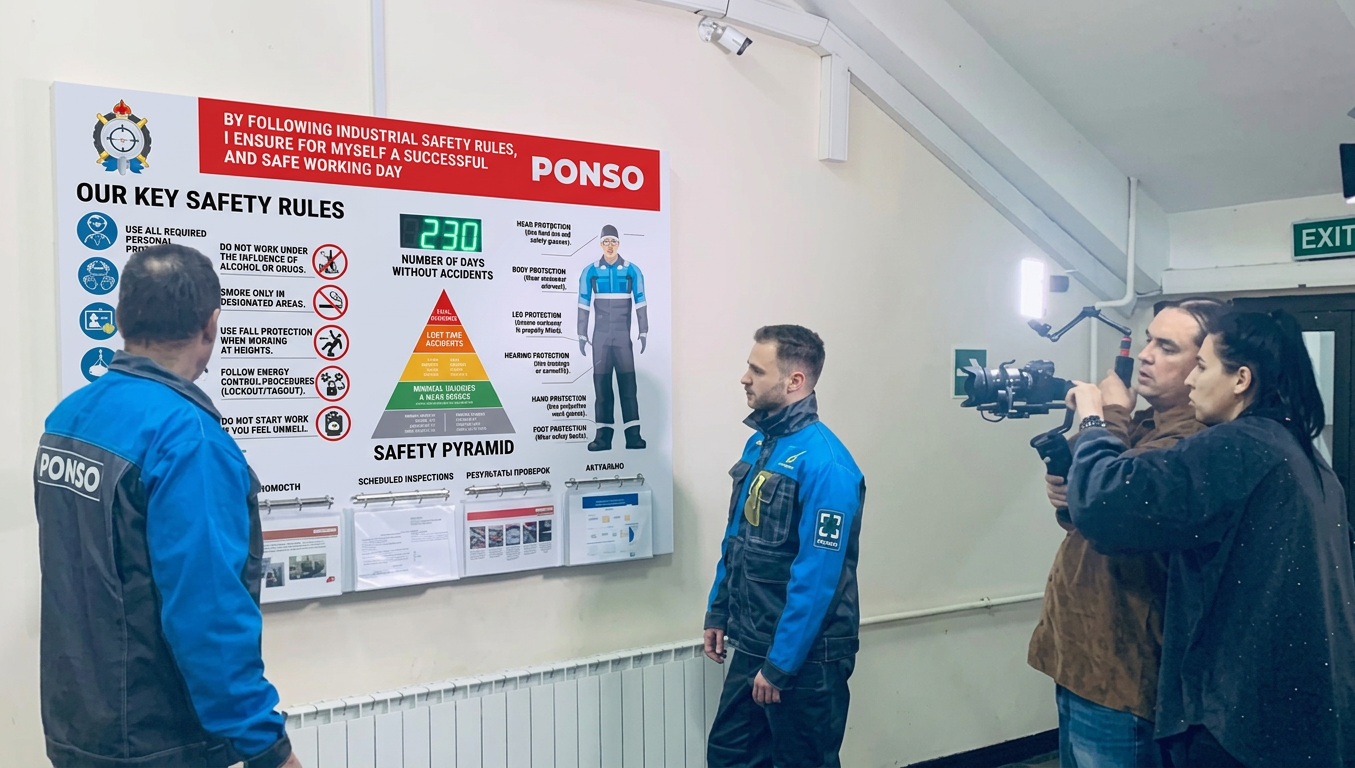
- Consent for the use of employees' visual images for corporate and educational purposes. Employees must sign consents for their images to be distributed within the corporate environment. You can seek help from your legal department to help draft proper consent forms. It is impossible to foresee everything — something might not go according to the approved plan during filming — but you can and should prepare for filming in advance and with high quality.
- Team Rehearsal. Conduct a final meeting with the team the day before filming. Remind them about their appearance — uniforms must be in perfect condition (or issue new ones)!
- Working on camera is the hardest part for those who don't usually "work on camera." Therefore, provide moral support to everyone directly involved in the filming with attention and kind words. Instill confidence in your "stars" — they will definitely succeed!
I hope these recommendations help you in implementing your HSE video project.