Preventing Workplace Overheating in High Temperatures
Working in hot weather outdoors, as well as in industrial and public premises without effective preventive measures, can have a negative impact on the overall condition of the body.
Thus, WORKING IN HOT WEATHER constitutes special working conditions that impose certain responsibilities on both employers and the workers themselves.
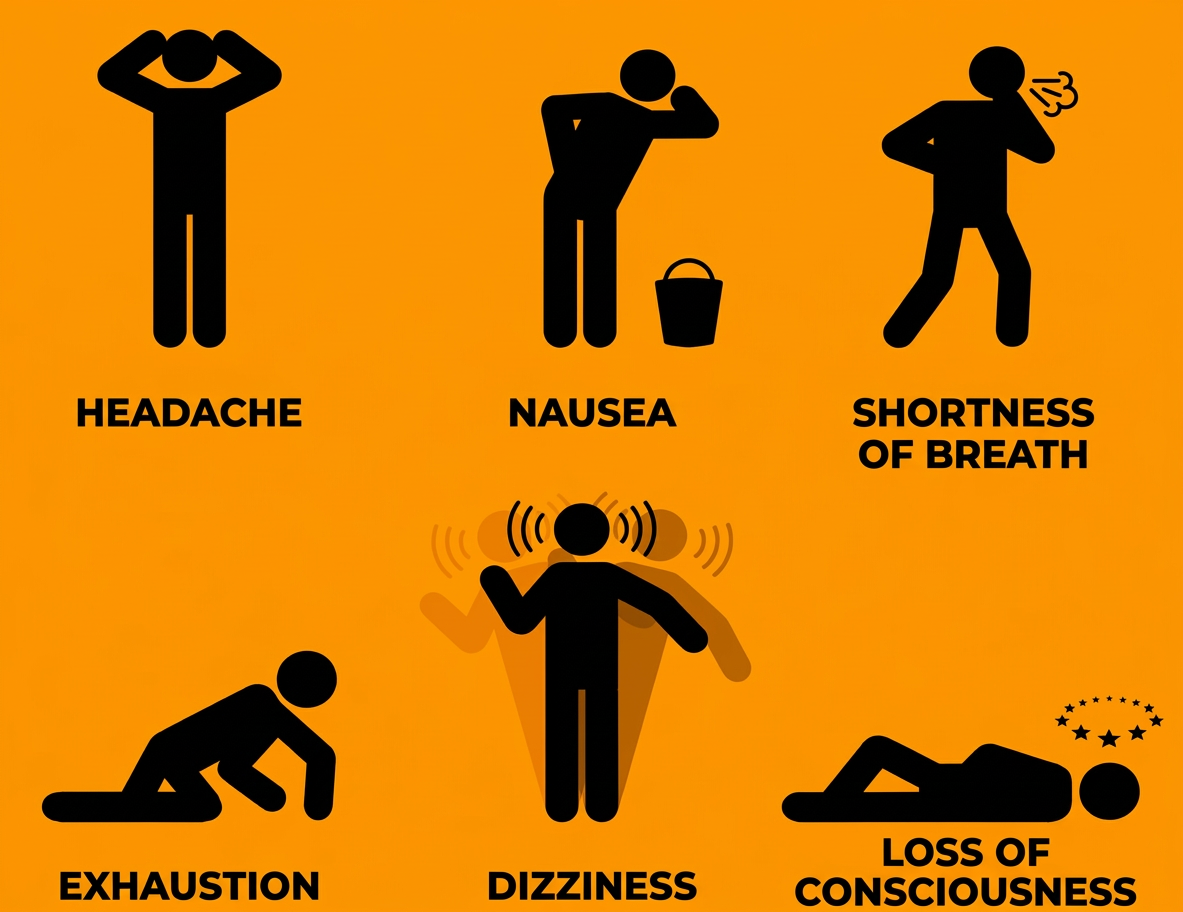
Overheating can be accompanied by symptoms such as:
UPON THE FIRST SIGNS OF OVERHEATING, A WORKER MUST:
- leave the zone of high temperatures and thermal radiation, notifying their immediate supervisor;
- take a cool shower (with a temperature not exceeding +35°C) for 10-15 minutes. Taking a hot shower is prohibited;
- drink water every 5-10 minutes;
- visit the health center to check their health condition.
TO PREVENT BODY OVERHEATING (HYPERTHERMIA), IT IS NECESSARY TO ORGANIZE A RATIONAL WORK SCHEDULE.
Working at an outdoor air temperature of over +32.5°C is classified by microclimate indicators as hazardous, i.e., extreme. When performing such work, the duration of continuous work periods should be 15 - 20 minutes.
To prevent dehydration, it is recommended to properly organize and follow a hydration regimen.
Water should be consumed frequently and in small amounts to maintain good body hydration. At air temperatures above 30°C and when performing moderate-intensity work, it is required to drink at least 0.5 liters of water per hour - approximately one cup every 20 minutes.
It must be remembered that in high-temperature conditions, drinking only fresh water can lead to overheating, as fresh water does not fully restore the water balance in the body; a rational hydration regimen is required for this.
IMPLEMENTING MEASURES TO PREVENT OVERHEATING AND FOLLOWING THESE RECOMMENDATIONS WILL HELP YOU COMFORTABLY ENDURE HIGH TEMPERATURES DURING THE SUMMER HEAT.
P.S. Within our enterprise, we have organized a video blog on HSE topics. You can watch a video related to this publication by following the link: https://vk.com/video-36777808_456241732