Interview with Safety Leaders: Vladimir Varlamov
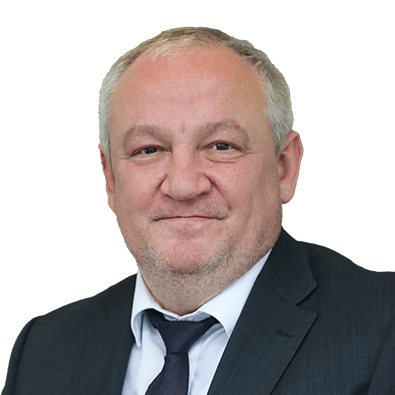
Developing a safety culture at large industrial enterprises requires a transition from reactive measures to systemic risk management. In this interview, Vladimir Varlamov, HSE Director at SUEK, shares his twenty years of experience in building such systems in the country's leading holdings, including Evraz and Metalloinvest. The transition from formal compliance with rules to conscious safety is impossible without the active participation of management and the adaptation of tools to the specifics of a particular production.
Safety dialogue as an indicator of company maturity
The speaker analyzes the practice of conducting "safety contacts". This tool is often perceived by line managers as an imposed formality, but its true goal is to engage production workers in a dialogue and shift attention to security issues. A properly structured contact allows assessing the company's development level and the team's readiness for safe work. It is important that the topics are relevant, and the dialogue itself ends with specific instructions and feedback, rather than being reduced to a monotonous reading of instructions.
Industry specifics: why risks "hunt" people in coal mining
The presentation details the difference in approaches between metallurgy and the coal industry. The principle "in metallurgy we hunt risks, but in coal, risks hunt you" clearly demonstrates the cost of a mistake in high-hazard conditions. In the coal industry, the instant realization of a risk requires absolute awareness, constant training, and a deep understanding of protective barriers. This approach directly echoes the experience of working in mine rescue units, where assessing one's own strength and team training are matters of survival.
Culture transformation and top management engagement
A key factor in successful transformation is the involvement of top executives and managing directors. Using Metalloinvest as an example, the speaker shows how it was possible to achieve a 90% reduction in fatal and severe injuries in two and a half years. This became possible by building a cascade of safety committees down to the shop floor level and implementing a manager's work standard. It is important to set complex tasks for top management that affect not only safety but also production processes. For example, the problem of high injury rates among contractors in one company was solved through a strategic reduction in the number of contractors themselves and a review of the principles of interaction with them.
System sustainability and working under constraints
Special attention is paid to project implementation under limited funding. The lack of large budgets requires micromanagement, targeted development of internal teams, and the creation of an "initiative funnel". The speaker also touches upon the "Goal Zero" concept. Practice shows that zero injuries is an achievable indicator if it is supported by accurate calculations, resources, and constant process verification. To prevent the built system from collapsing after the leader leaves, its elements must be deeply integrated into basic processes: organizational standards, management training modules, and the motivation system.
What you will learn from this webinar:
- How to make a "safety dialogue" a working tool rather than a formal five-minute meeting?
- What arguments help engage top management and managing directors in HSE issues?
- How to adapt successful safety practices when merging enterprises with different production cultures?
- How can a risk management system be developed under strict budget constraints?
- How to embed safety processes into the company's DNA so they work regardless of management changes?