HSE Officer Code through Company Values: Building Effective Communications
Dear colleague, I suggest starting a series of articles on the topic of the "Modern HSE Officer Code."
The world does not stand still. The previously accepted model, where an HSE engineer is a controller or inspector who punishes for violations, has long outlived its usefulness.
Business requires active, passionate methodologists who are in love with their profession and believe in the importance of their mission. Employees who demonstrate leadership in HSE and help build a culture of safe production.
We held a brainstorming session and looked at ourselves through the lens of "COMPANY VALUES."
This is how the "HSE Officer Code" was born. Here it is — the ideal role model for us.
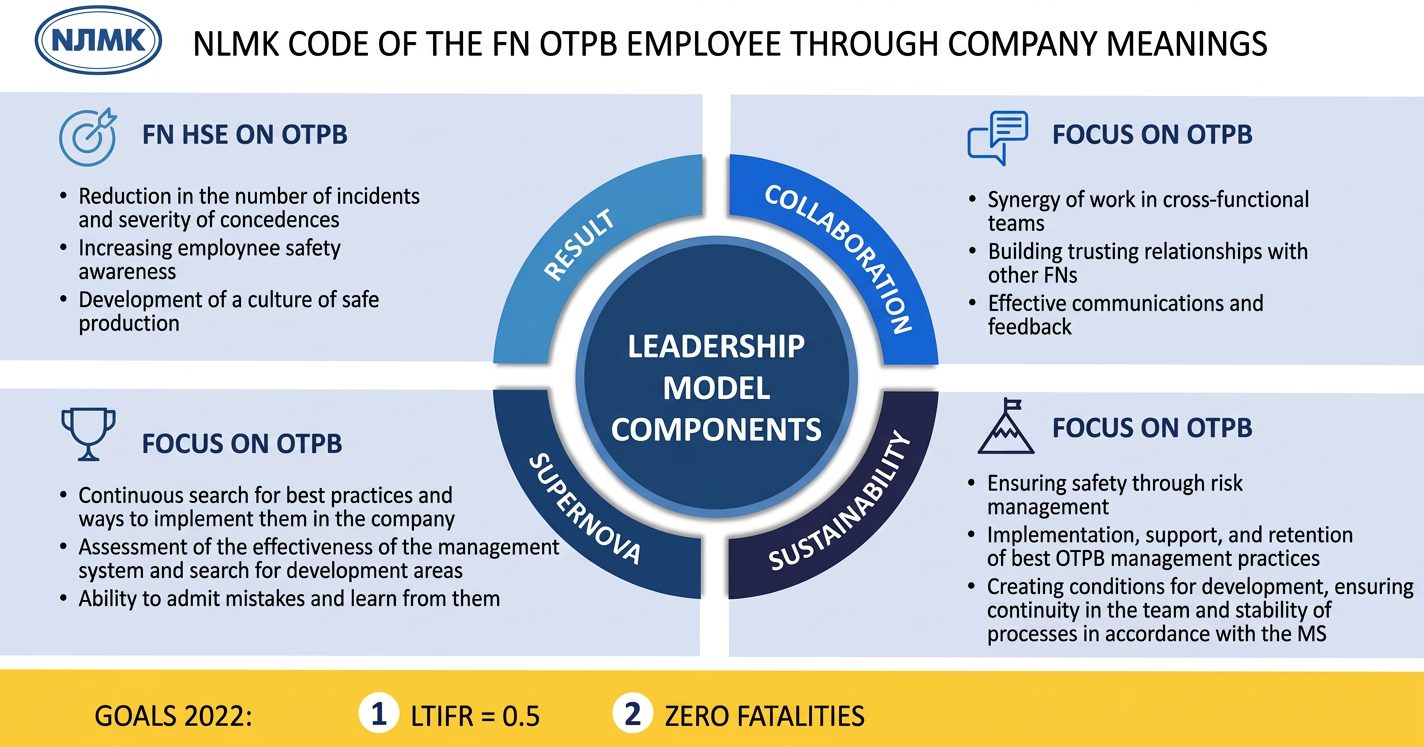
Today, I offer my thoughts on the value of "Collaboration" in the context of building effective communication.
I believe that building effective communication accounts for 80% of an HSE officer's success, while their technical foundation is only 20%. I have often seen a technically skilled colleague completely fail to establish contact with either employees or management.
As a result: endless conflicts, everyone convinced they are right, and either no process improvement or a decline in performance indicators.
A good HSE officer cannot do without knowledge of psychology, emotional intelligence, and even the basics of marketing. Everyone knows that two different people will hear the same speaker differently.
How a listener perceives information is influenced by their previous experience, emotions, and circumstances.
All of this must be taken into account when communicating. Has anyone ever wondered that we always evaluate a colleague at work on three levels?
- PERSONALITY 👽 Are you interested in the person as an individual?
- PROFESSIONALISM 🧐 Is there trust in them as an expert?
- ENERGY. 🚀 What state is the person in after the conversation? What feelings do they experience?
Have you noticed that there are people at work who are 100% pros, but you really don't want to go to them for advice? 😬 You'd rather struggle on your own. 😩
Because we are all human and we communicate, first and foremost, emotionally. 💕
If a person is left in a good mood after talking to you, if you have charged them with positivity, they are very likely to turn to you for help the next time they are unsure how to perform a task safely 😉
In one professional HSE community, there was a very cool expert. Top-tier 🚀 in the field of HSE.
- Dedicated to the profession to the core
- Ready to answer in the chat 24/7
- Having many, many years of experience
- Sincerely believing that they cannot help but assist
It's great to be able to ask for advice in your field, even when you consider yourself a pro.
You rejoice like a child that you can brainstorm and solve a problem of any complexity. However, there was one very big "But"!
This was exactly the case where the person completely did not know how to build communication:
- Was often rude
- Started arguments for the sake of arguing to prove superiority
- Did not let other participants express their opinions, shutting them down
- Humiliated anyone who showed weak knowledge
- Constantly intimidated others with criminal liability
This led to many people simply stopping their responses, some unsubscribed, and some stopped asking questions for fear of being showered with verbal abuse.
The chat administrator made a tough decision and asked the expert to leave the community.
If you often receive negative feedback but justify it by saying that it's not you, but the profession that requires it, you are lying to yourself.
It's better to start monitoring your own toxicity before you are declared ineffective.
I suggest doing a specific exercise:
- List 20 people from your circle. Mark each with a minus, zero, or plus based on the feelings the person leaves you with after communicating.
- Do the same in reverse: try to remember and imagine what feeling the person was left with after communicating with you?
- Analyze the number of minuses
- What is the reason for them?
- What can be done to turn a minus into at least a zero?
Reflection on the topic "Is it true they are all bad and I am pure and perfect?" can be very useful. We always start with ourselves ❤️