The "Carrot and Stick" Approach to Managing Drivers
An effective road safety management system at an enterprise involves comprehensive work with the drivers of contracting organizations.
Often, contractor drivers arrive at a client's site knowing nothing about the specifics of the road network, seasonal hazards on the company's roads, the safety rules in force at the site, or the liability for violating them. Road safety, HSE, and procurement departments put a lot of effort into including information about the client's standards and rules in the contract during the procurement and contracting stages. However, practice shows that the requirements of the client's local regulations are often not communicated to the contractor's employees, remaining merely a list of provisions and standards attached as a supplementary agreement to the contract. If a contractor's driver starts working at the client's site without knowing the current rules, how can they be held accountable for violating them?
The first thing a client's road safety specialist should do is take responsibility for providing drivers with the minimum necessary knowledge to help them work safely at the site. An effective tool can be an induction course for new drivers, where the company's basic safety rules are explained, the circumstances and causes of accidents that have occurred at the company's sites are analyzed, and recommendations for safe vehicle operation at the site are provided. It is important not to leave new drivers without introductory data; you must immerse them in the current rules and make it clear that compliance is the norm in this territory. Drivers will understand that the client sees them and is investing time in them.
In today's world, the driving profession has unfortunately lost its prestige, yet it remains essential and in high demand. It is important to let the driver know that they are not the least important person in production — that not only the fulfillment of the transportation plan but also the preservation of human lives and health depends on their actions. Professional development for drivers, such as defensive driving training implemented by many large companies in our country, is a wonderful "carrot." It allows drivers not only to learn the art of preventing accidents but also to feel their value to the employer and feel significant.
If a road safety specialist interacts with drivers only as a supervisor — identifying and documenting violations and initiating fines — drivers will fear such a specialist, fear inspections, and become resentful of the system. Furthermore, if the only option is to punish drivers financially for rule violations, they will lose motivation. The "stick" must be balanced with a "carrot." A driver should not be perceived as a potential violator. You need to make the driver feel like a valuable component of the system and realize their key role in ensuring road safety. Try not only to inspect drivers but also to dedicate time to the problems they face at the site. By organizing meetings with drivers, a road safety specialist can establish a constructive dialogue where both parties receive useful information. While working, drivers notice problematic issues in the organization of road safety at the site. If you give drivers the opportunity to speak out about the difficulties they encounter, you will receive invaluable information that can, and even should, be used to correct errors in the road safety system. Drivers will then view you not as a harsh inspector, but as a colleague striving to help them and keep them out of trouble. At such meetings, drivers get to know each other, communicate, and share experiences. This approach will reduce the number of rule violations, improve driver etiquette at the site, and enhance the authority of the road safety department.
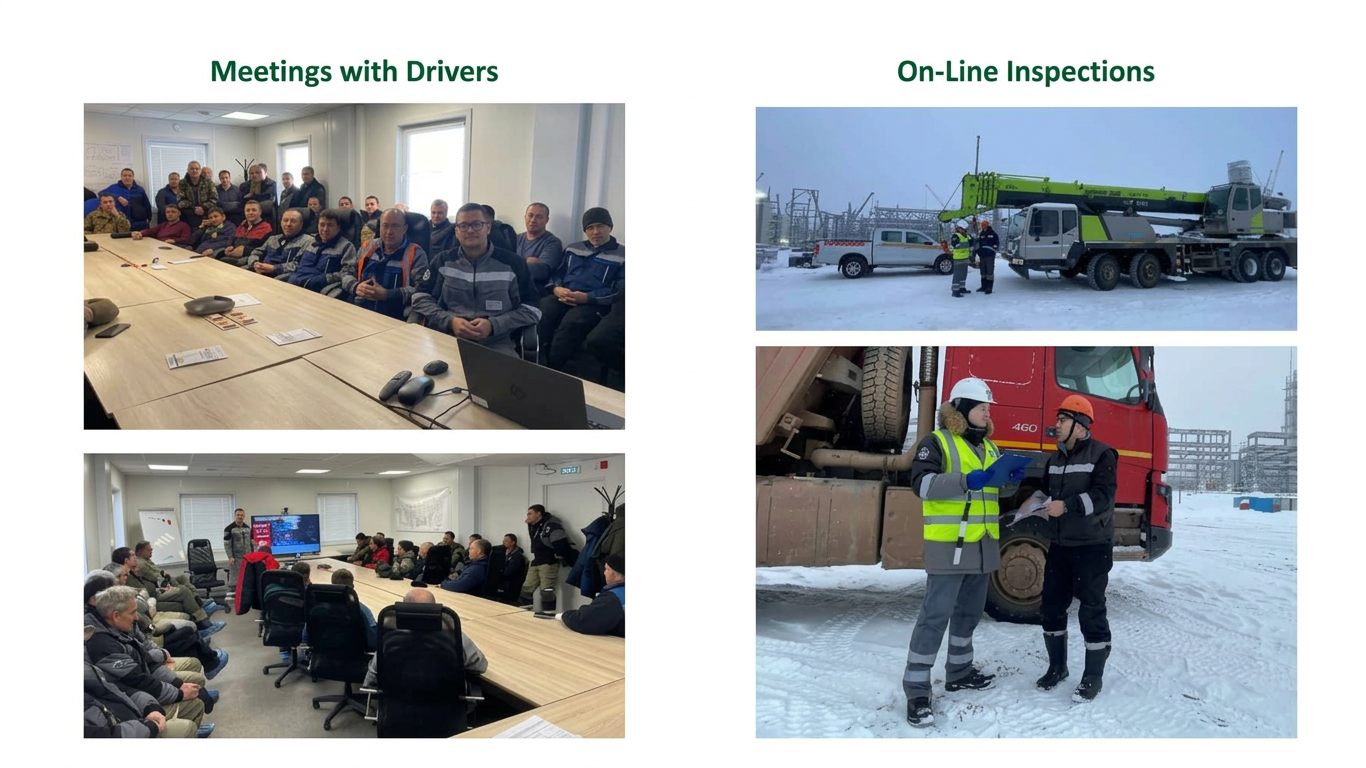
In what areas do you work with drivers? Let us know in the comments.
- Induction course for new drivers
- Defensive driving training
- Periodic meetings, STOP hours
- Monitoring drivers on the line
- Behavioral safety dialogues
- Entry interview