Speaking the Same Language
There is a common belief that success in achieving set goals is the result of skillful communication. By knowing the characteristics of your own perception and that of your interlocutor, you can convey your thoughts more accurately and achieve undeniable results. Have you ever been in a situation where you tell someone something, and they don't understand you? At the same time, the person might tell you the same thing but in different words. If you are "speaking different languages," a misunderstanding arises simply because people with different mindsets and life experiences express themselves differently. But what if this misunderstanding occurs in safety matters? For example, an employee sees something unsafe happening, such as the risk shown in the photo:
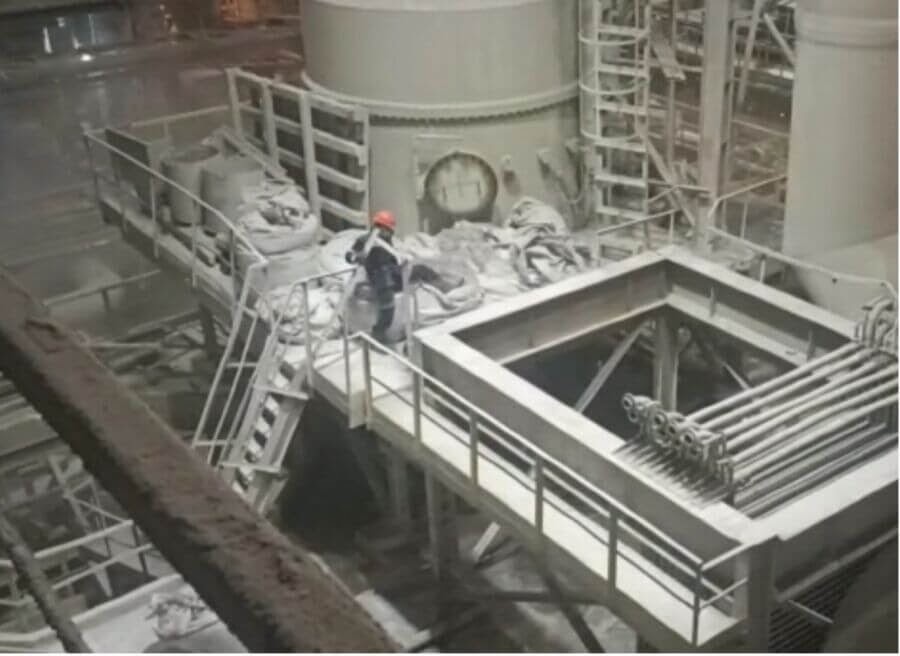
At the same time, they report to the responsible person: "A person could fall; the area needs to be secured." It seems clear enough; no questions should arise. We take it and develop measures for the recorded situation. But what exactly was meant when the risk was recorded, and what should the measures be developed for? To avoid these questions, it is necessary to formulate the risk correctly. Would you have described the observed risk the same way?
With different visions of the situation and different interpretations, compensating measures might be developed for something completely different from what the author of the recorded risk intended, while the area remains unsafe. For instance, based on the photo provided, the person performing the task installed railings on the beam, eliminating the risk of falling from the platform, while the author meant the difficulty of moving across the platform due to the bags placed on it. So, how do we reach a common understanding and ensure everyone speaks the same language?
First, it is necessary to create a single, universal risk formulation that fully describes the situation so that it contains all the answers to the questions: 1) what injury the worker might receive; 2) where it will happen; 3) under what circumstances; 4) what might cause the person to be harmed. By fully describing the situation, a general picture emerges, allowing for the development of necessary measures to eliminate the specific risk.
Second, if we have created a universal formulation, we must teach everyone how to use it. It is important to understand that if we create a standard, it must apply to everyone. Therefore, we teach everyone from top managers to workers how to apply the formulation.
Third, the formulation must be extremely clear and easy to apply.
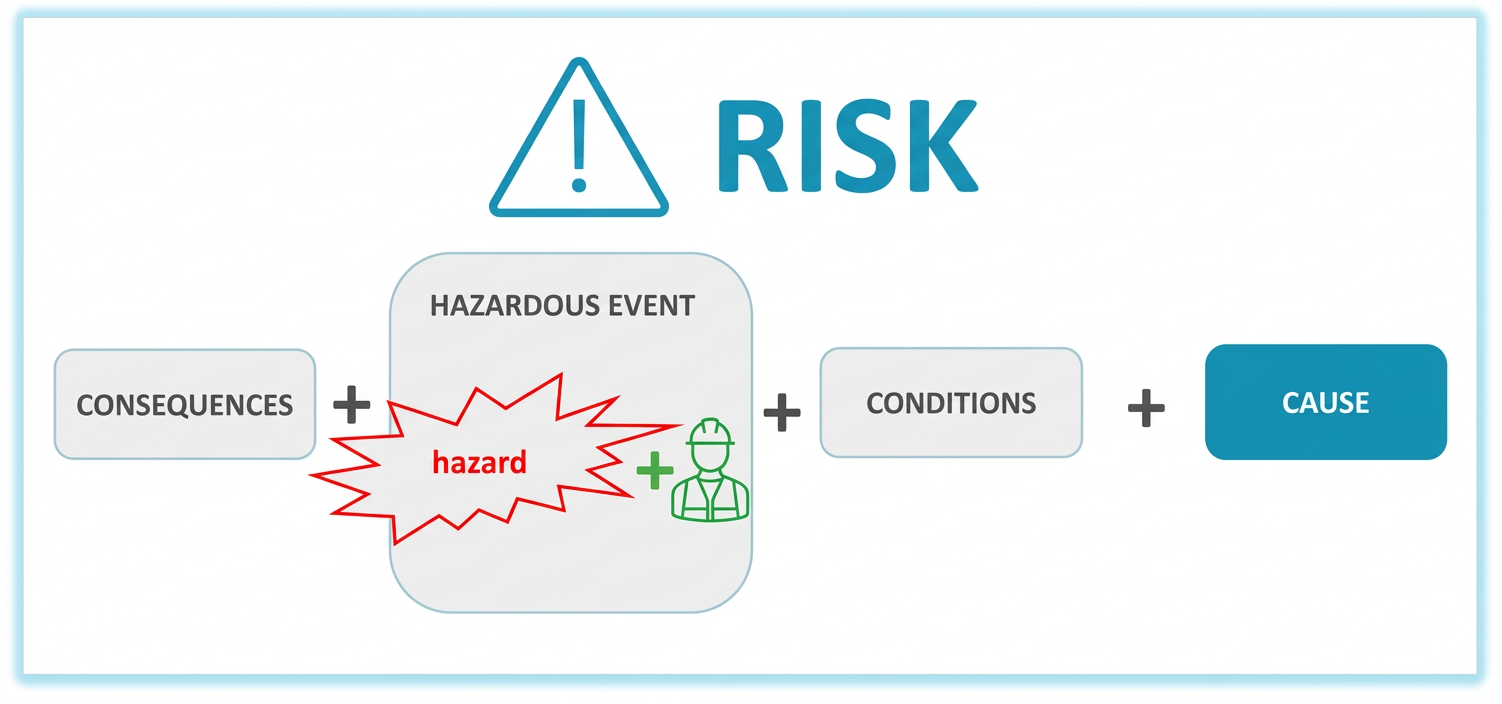
All of this was implemented at Metalloinvest. We teach all employees to "correctly" describe risks as part of proactive training on the risk management system. We created a tool called "Risk Formulation," which includes four main parts:
- injury that could be sustained;
- hazardous event;
- conditions under which the risk may materialize;
- cause.
Moreover, every employee can easily determine the first three parts, and they are mandatory when formulating a risk. The last part — cause — may not always be obvious; it requires an investigation into why the incident might occur, so the cause can be omitted.
Returning to our photo above, the risk associated with the bags scattered across the platform would sound as follows:
Fracture of a limb as a result of falling from bags while moving across the platform (level 3.700) of the GSK section due to the placement of bags in the path of movement. If we break it down into components, we get:
- injury - fracture of a limb;
- hazardous event - falling from bags;
- condition - moving across the platform (level 3.700) of the GSK section;
- cause - placement of bags in the path of movement.
Once we have outlined the situation using the formulation, it becomes clear exactly what needs to be done: find out why the bags are stacked that way, remove them, determine a storage location, work with personnel, etc.
But there is another risk in the photo related to falling from the platform, which sounds like this:
Fractures of various body parts as a result of falling from the platform (level 3.700) of the GSK section to level 0.000 while moving across it.
In the second case, by formulating the risk using the universal formula, we can also understand exactly what the author of the recorded risk meant, what hazard is present, and what measures to develop.
By creating a single template for risk description, we can manage them more effectively. In addition to teaching employees to "speak the same language," we gain a unified understanding of existing risks, as there is no longer a need to clarify information, thereby reducing the response time when a risk is recorded.