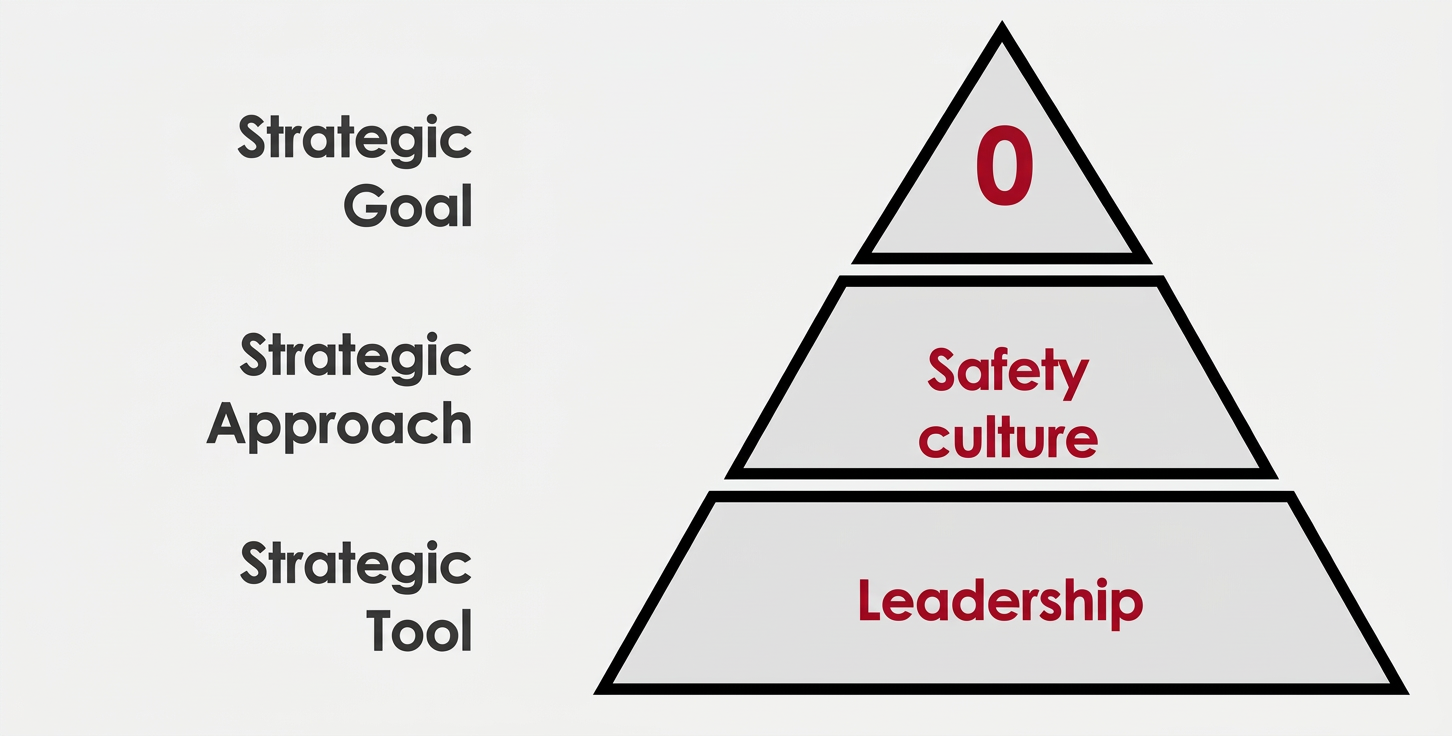
Key Elements of HSE Strategy in a VUCA World
The world in the 21st century is changing dynamically. This leads to increased risks for workers and growing complexity in organizational management, including HSE. Today, this era has its own name – the VUCA world – a volatile and complex world.
At the same time, the employer's duty to preserve the life and health of employees in the workplace remains the highest priority.
How can this priority be ensured in modern conditions?
The global professional community's adequate response to the challenges of the 21st century is the global Vision Zero concept and its 7 Golden Rules, which represent the key values of HSE management for any enterprise.
Moreover, achieving zero injuries is not a KPI. It is a strategic mindset, meaning that every enterprise must create an organizational environment and working conditions that generate this sustainable result – Goal Zero – over a long period.
Again, the question arises – how to ensure this?
The answer to this question is safety culture, which reflects a strategic approach to achieving "Goal Zero," and here is why: any corporate culture, including safety culture, essentially reflects the level of internal alignment (engagement) of all organization members toward achieving a common goal.
Establishing a specific level of safety culture or generally accepted norms of corporate behavior allows organizations to operate without injuries or accidents for long periods – several years or even decades. This is exactly what we all need.
Leadership serves as a strategic tool for developing safety culture, and there is a reason for this.
It is well known that employees are an organization's most valuable asset and its driving force. In turn, among this asset, the employees with leadership qualities represent the greatest value to the organization.
The phenomenon of leadership is the initiation of a process of voluntary unification of people to maximize each person's potential to achieve a common goal.
In this sense, a leader is a person who, on their own initiative, initiates and promotes the leadership process.
This is precisely why leadership is the strategic tool for developing safety culture.