Employee Image: Who We Are in the Eyes of Others
There are many important areas in HSE work: HSEMS, PSM, SAWC, risk management, contractor management, and so on. But who are we doing all this for? I would venture to suggest it is for the workers, for their health, and for the preservation of their lives. However, how often do we ask ourselves if they actually need it? How do they feel about innovations? How convenient is it for them to work with this information?
Workers are always specific individuals with their own beliefs, which means our work is inherently about interacting with people. This significantly complicates our job, as we must not only write a document, a rule, or come up with an initiative, but do so based on people's preferences while also considering the cognitive biases they are subject to.
An extremely important element of our interaction with employees is our image. I suggest we look at this in more detail.
A person's image is how they are perceived by others, how they look in the eyes of others, or what others' opinions of them are. In Patrick Hudson's culture assessment questionnaire, there is a specific question with five target states regarding the perception of HSE services: “How is the HSE department perceived in the Company,” from which we can conclude that this is definitely an element of the overall safety culture.
From the perspective of our function, the issue of image is not a triviality or an abstraction, but a specific tool of influence, especially if we ground this concept in the specific entities that make up an image:
- communication;
- utility;
- fairness of decisions;
- accessibility.
Categories can vary, but they must be very specific and measurable.
Still, why is this so important? Here are three simple arguments for why it is worth working on your image:
Social labeling or the LaPiere paradox.
Imagine a company has a staff turnover rate of around 10%, and all new hires receive their first information about the HSE service from a team where it is not held in high regard. After some time, under constant social pressure, the person will begin to share these views — say, negative ones — believing it's better not to deal with us. Thus, we get an employee who distrusts us from the start.
Fundamental attribution error.
There is a standard formula for the effectiveness of change implementation:
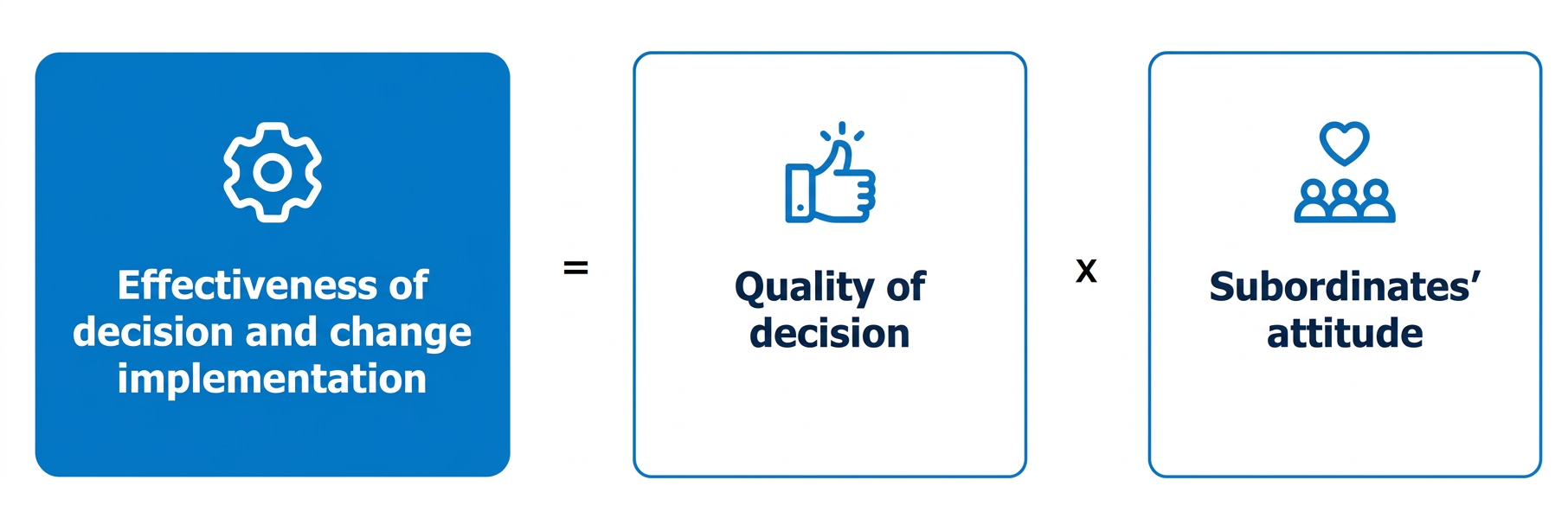
Since changes are implemented almost every day in our work, and while we have no questions about the quality of our work, there are always questions about how people treat us when we come to implement them or demand the realization of new approaches. If we have an image of useful, sensible people, the chance of being heard increases; conversely, the ways to sabotage even the highest quality decisions are countless.
Work performance and people's beliefs.
Imagine the following interpretation of the performance pyramid:
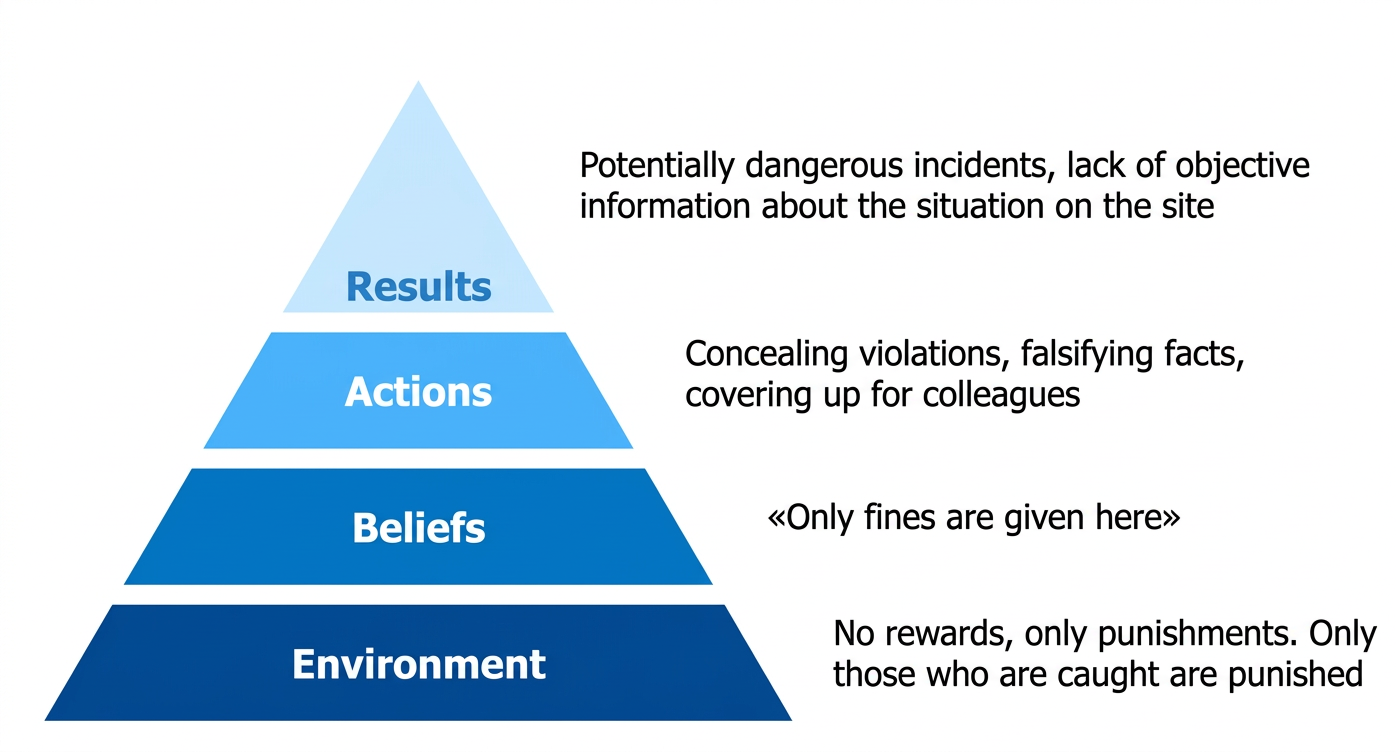
Through our actions, especially over time, we form and reinforce specific employee beliefs that shape our image. And if it looks like the pyramid above, we are in for great difficulties in interaction.
It turns out we want to be “good” for a reason.
What specifically forms the image of the service? It comes from basic components:
- what employees say about them;
- what the service does;
- the information background accompanying the work.
We can influence each component. To do this, it is necessary to carry out regular work through the following stages:
- Form a target vision of what the HSE service should become.
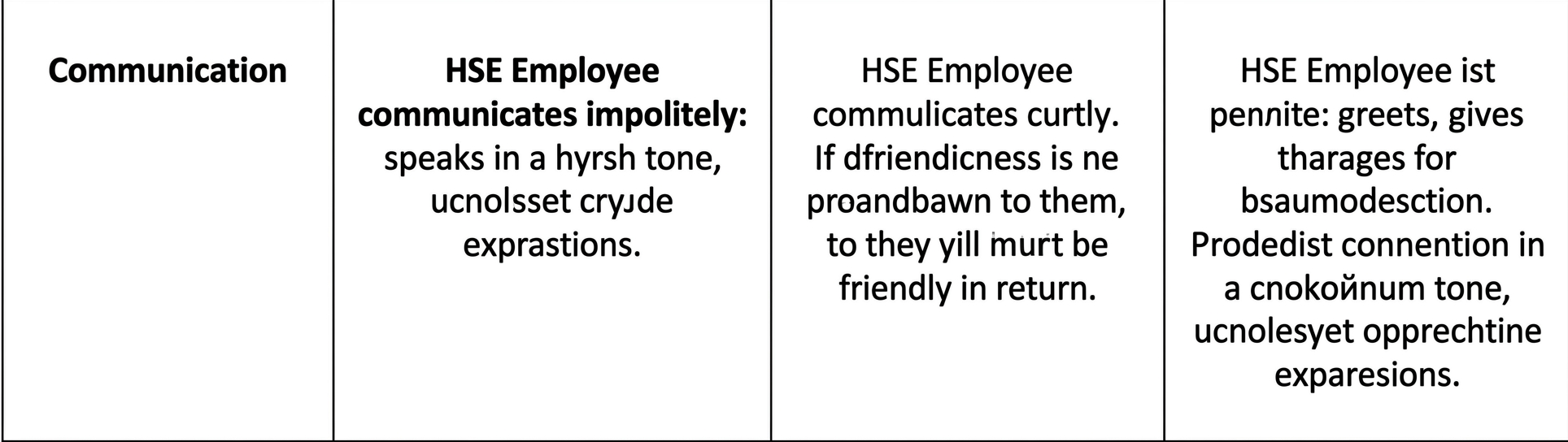
- Develop a questionnaire to assess the image across specific categories. The questionnaire should be small (8 – 12 questions), and the answers themselves should describe a specific target state, for example:
- Conduct surveys and focus groups with a sufficient sample (10% of the workforce).
- Identify the main problems in the basic categories, as well as the overall image index. It is quite possible that there are no problems and nothing needs to be done.
- If problems do exist, it is necessary to:
– Conduct a large-scale information campaign about the start of the HSE function transformation.
– Provide training for service employees if needed, for example, on building partnerships or communication in difficult conditions.
– Based on specific problems, begin implementing changes in activities aimed at increasing awareness or utility for employees (this implies project activity).
– Regularly inform employees about the changes taking place.
– Dispel myths and standard employee biases through soft influence.
Working on your image actually implies a deep reformatting of the HSE service's activities, and if you look at the steps, it is not done just for the sake of the image. We all want to bring value to the enterprise; we want to be professionals, including in the eyes of others. And if it also helps us preserve people's lives and health, why not do it?