Incident Investigation: Practices of Zarubezhneft-Dobycha Kharyaga LLC
As is well known, the process of investigating workplace incidents aimed at finding their root causes is quite complex and requires a serious and impartial approach. The employer's approach is crucial, specifically their commitment to a high-quality investigation of every incident, regardless of severity, to prevent similar occurrences in the future.
Russian legislation governing the incident investigation process has recently undergone several changes. The new "Regulation on the Specifics of Investigating Industrial Accidents," approved by Order of the Ministry of Labor of Russia No. 223n dated April 20, 2022, introduced many new elements: document forms and corresponding classifiers with codes for types and causes of incidents, requirements for professional risk assessment, and regulations for investigating accidents involving remote workers and those working under civil law contracts.
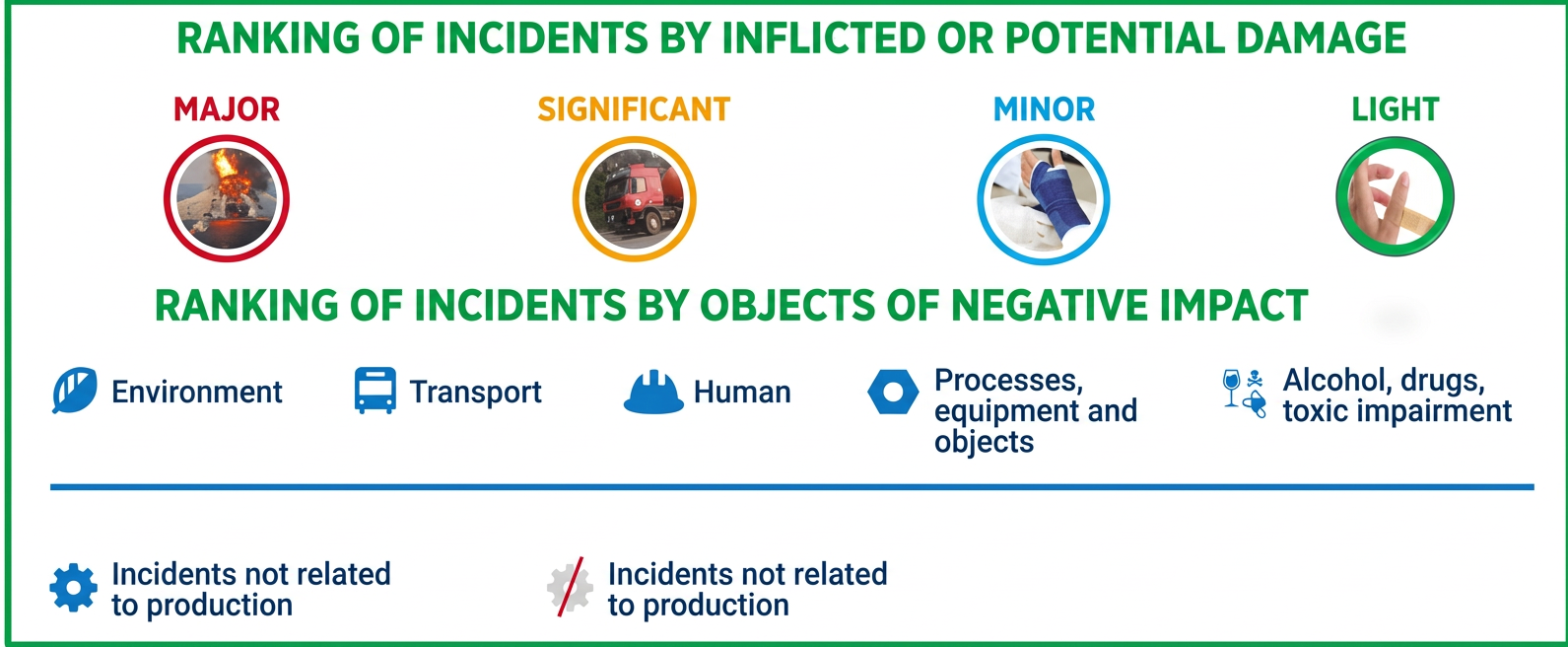
Guided by international best practices, Zarubezhneft-Dobycha Kharyaga LLC follows internal incident investigation regulations in addition to Russian legal requirements. According to these regulations, the company conducts investigations into incidents, including those caused by contractor employees at designated work areas on the customer's sites. We have introduced an internal, more detailed classification of incident types, both work-related (occurring during working hours at a production facility) and non-work-related (occurring during off-hours or due to occupational disease).
Incident Ranking and Classification Diagram
The investigation includes 8 main steps:
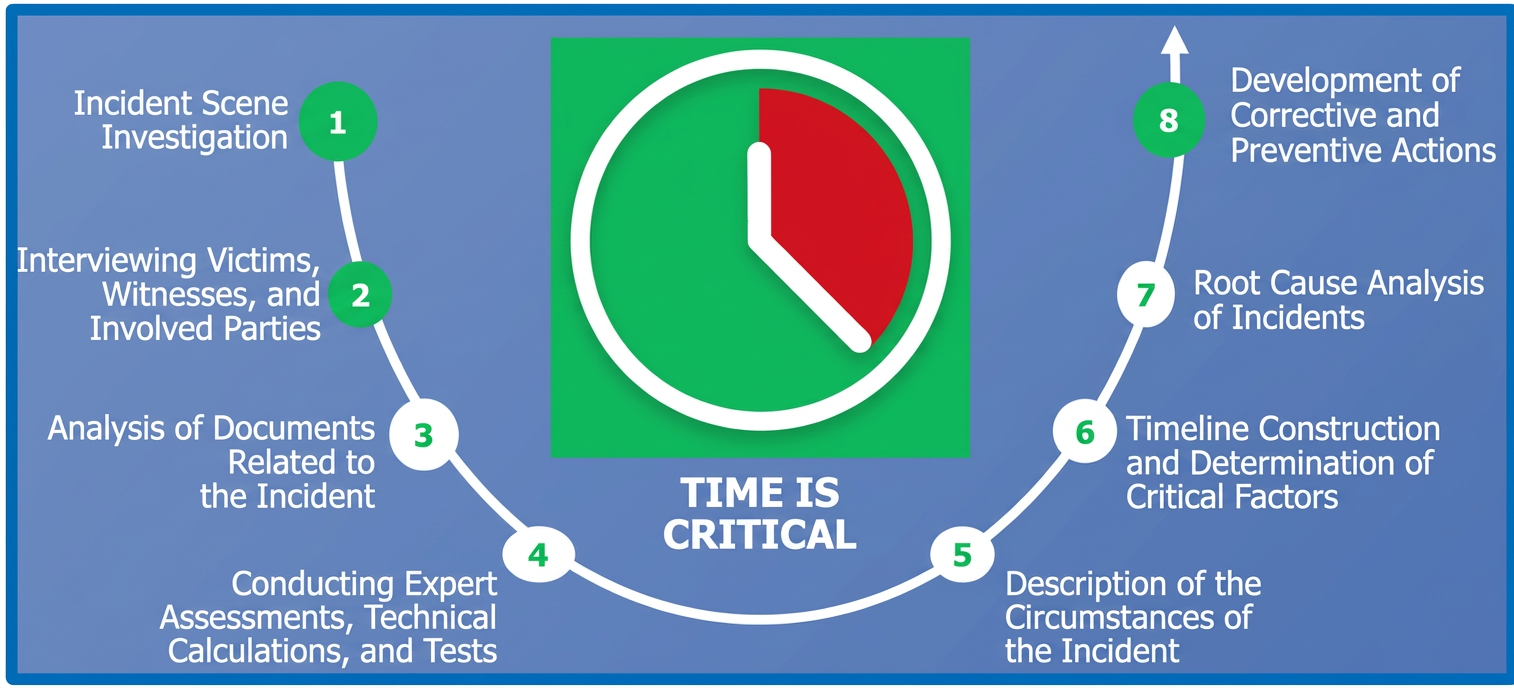
The first five steps are standard practices implemented within the framework of Russian legislation.
At the fifth step, during the collection and analysis of established facts, the "LORD" method is used, consisting of 4 blocks:
|
| "L" — People "O" — Equipment "R" — Location "D" — Documents |

Correctly formulated facts serve as the basis for moving to the sixth stage of the investigation — building a timeline. Events (facts) obtained in the previous stages are organized and plotted chronologically on a diagram. At this stage, the investigation team (commission) uses the brainstorming method. A moderator (commission chairperson) is assigned to the team.

The collected facts are divided into unsafe conditions and unsafe acts. Critical factors are identified — those that directly influenced the course of events or whose absence could have prevented the incident or reduced its severity.
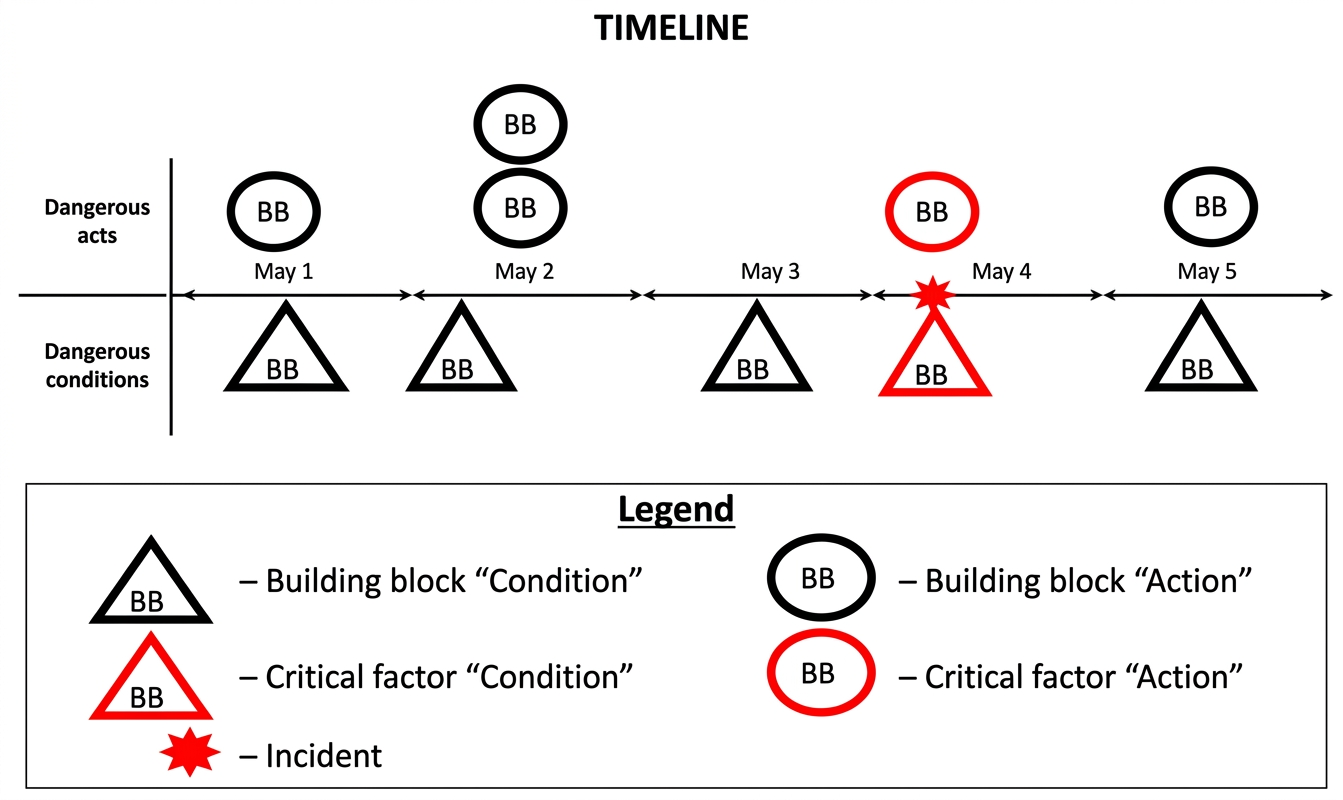
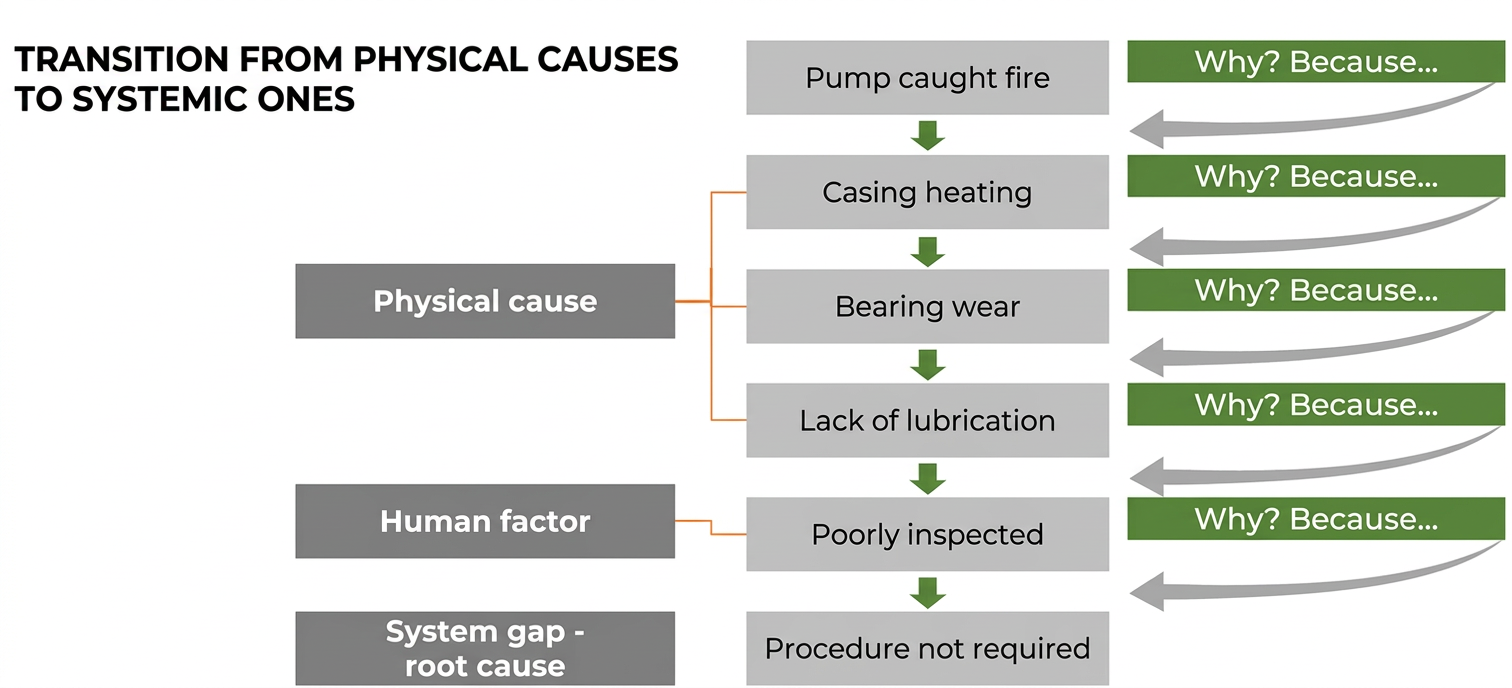
When the timeline is built, the investigation team moves to the cause-and-effect analysis stage. Zarubezhneft-Dobycha Kharyaga LLC uses a specific methodology for this. First, direct causes that led immediately to the incident are identified. For example, if an electrician receives an electric shock, an un-de-energized electrical installation and missing personal protective equipment (PPE) would be the direct causes of the accident, despite the fact that they were preceded by a series of contributing events (factors), which are the root or systemic causes of the incidents. In other words, these are gaps in the HSE and industrial safety management system.
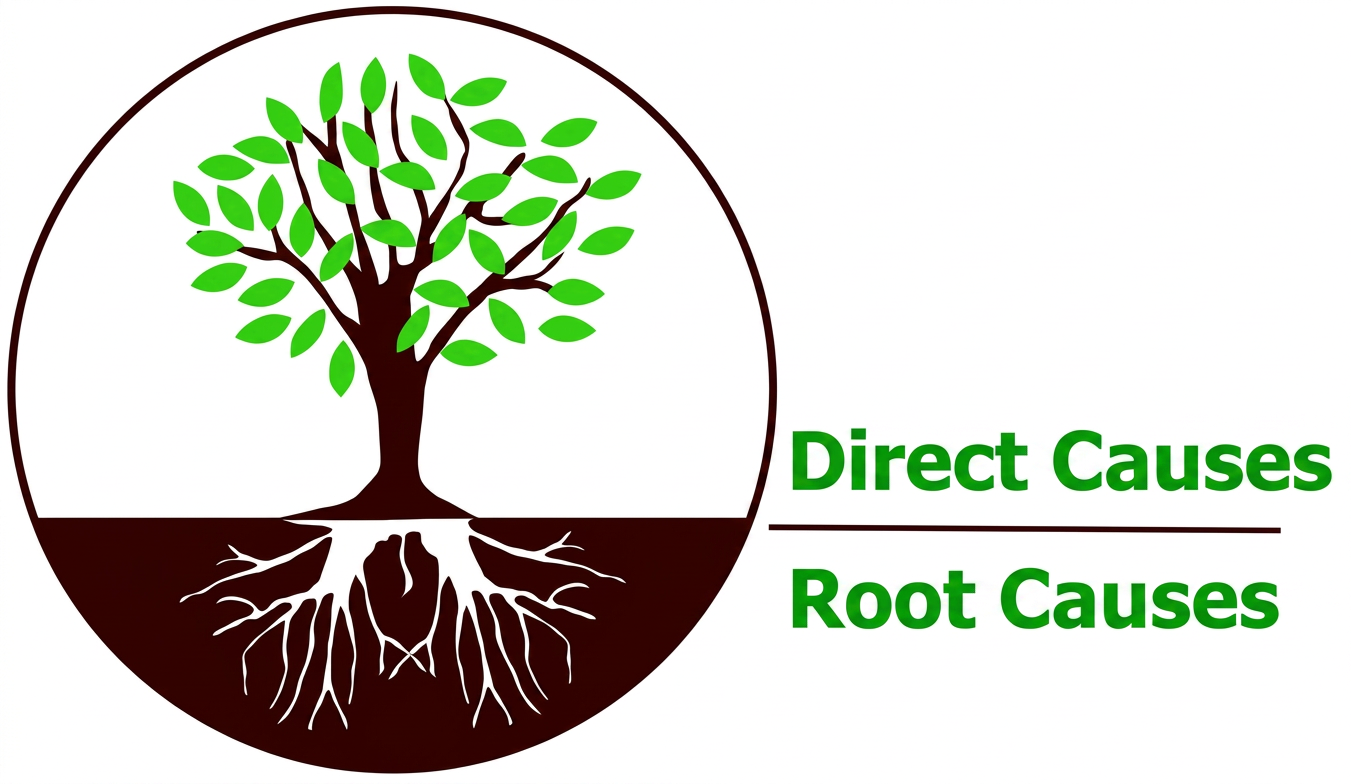
These are identified using a simple cause-and-effect analysis methodology to establish the root causes of the incident by repeatedly asking "Why?". Answers must be supported by collected facts and data and should not be based on emotions or hypotheses. Generally, the question needs to be asked 5-7 times to reach the root cause. If you believe you have found it, answer the question: "Would eliminating this cause have truly prevented the unsafe condition or the unsafe act?". If the answer is yes, you have found the root cause.
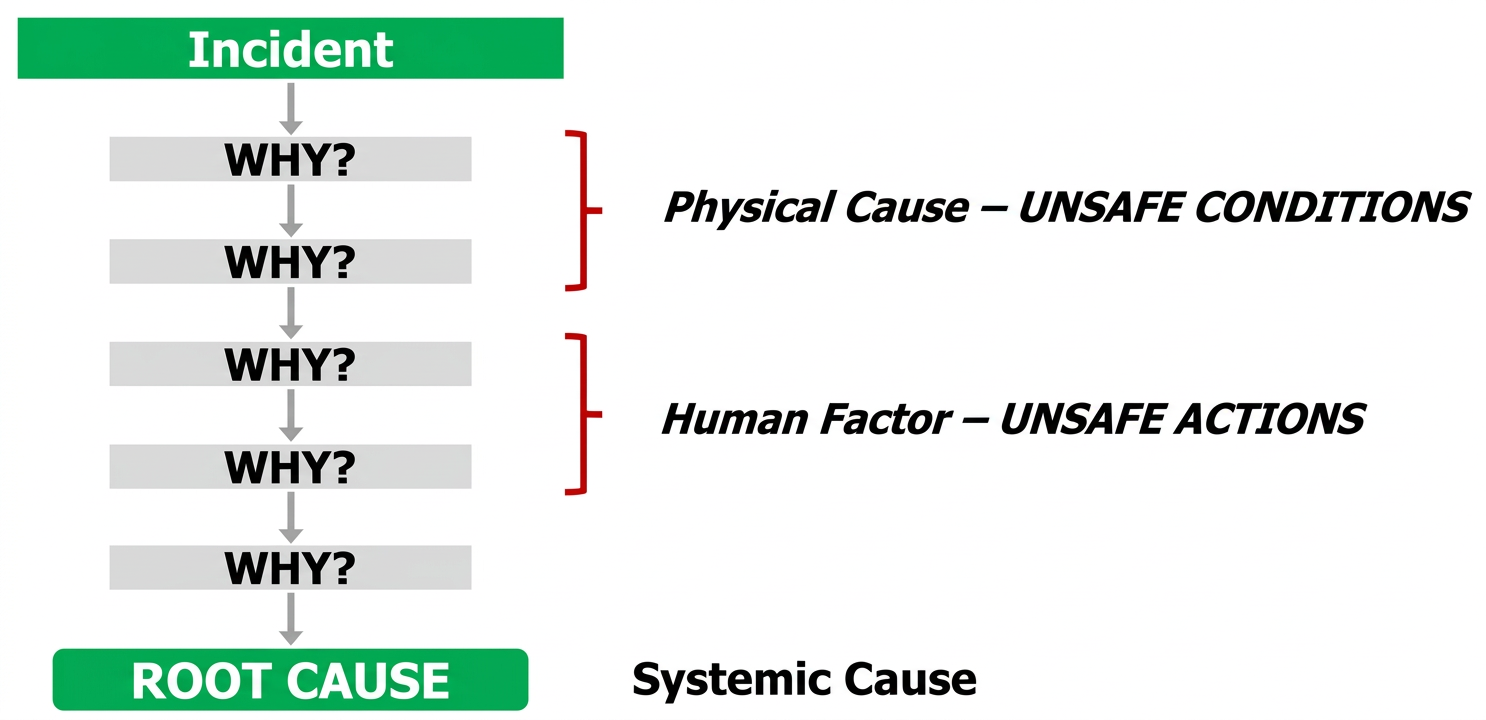
A cause-and-effect relationship is usually easily established between direct causes that immediately influenced the occurrence of the incident. Eliminating direct causes while ignoring the search for root causes will sooner or later lead to a similar incident. In the electrician example, this could be a lack of training, lack of authorization, or failure to issue PPE. The main task of the investigation is to identify the root causes.
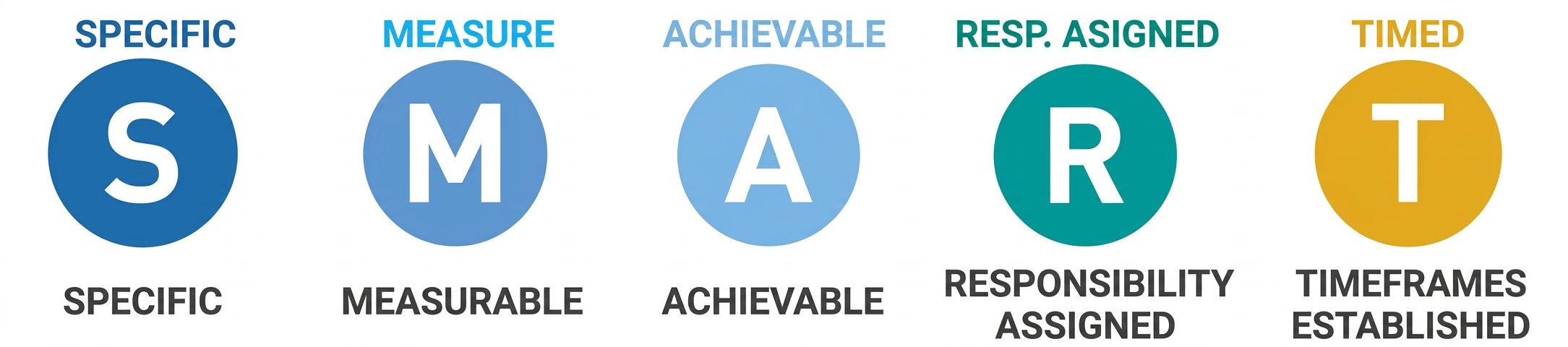
The final stage is the development of an action plan based on the investigation results. It is important to distinguish between corrective and preventive actions. Corrective actions eliminate the causes of a detected non-conformity, while preventive actions eliminate the causes of a potential one. At the same time, it is the quality, not the quantity, of the planned actions that matters.
They must comply with the "SMART" principle, namely:
- clearly define planned actions;
- prioritize planned actions;
- eliminate or reduce risk, define the final result;
- consider the probability of hazard exposure, the severity of consequences, the frequency of exposure, and the costs to the company.
The documentary result of the investigation is a report that includes an action plan and covers all 8 steps completed by the commission. Within three working days of the investigation report's approval, a list of Lessons Learned is compiled and distributed to company employees and contractors to prevent similar incidents in the future.
The company's transparency and maximum staff awareness are the keys to future safe operations. If, as a result of the investigation, direct and root (systemic) causes are identified and distinguished, a corrective and preventive action plan is developed, the results and lessons learned are widely communicated, actions are implemented within agreed timeframes, and similar incidents do not recur — then the investigation has been conducted effectively.