No Risks or Are We in a Mental Trap?
The current business climate is characterized by the following:
- The volume of various local, regional, and global regulatory requirements is growing rapidly.
- Brand reputation, market share, and company value for stakeholders depend on business sustainability.
- Occupational safety for employees is always under the close scrutiny of society and company management.
Recently, fundamental changes have been taking place in the business world. Current economic instability forces a focus on profitability and financial flows.
Effectively managing risks, including those in HSE and industrial safety, is more relevant than ever. We know all too well that if you don't manage risks, risks start managing you. The vast majority of Russian companies use a risk-based approach. However, implementing a risk-based approach system does not lead to a reduction in occupational injuries and does not ensure the achievement of the "Vision Zero" goal. Time and again, we hear about man-made disasters, environmental accidents, and workplace incidents. The global community has developed an important economic principle: "Risks are managed by those who create them." Without the active participation of the worker themselves, ensuring safety is impossible — and that is a fact. Until companies establish a feedback mechanism, risk management identification will be based solely on hypotheses of "how it should be," and the risk-based approach system will not be effective enough.
Perhaps this is happening because we are in mental traps, or maybe because there are no risks?
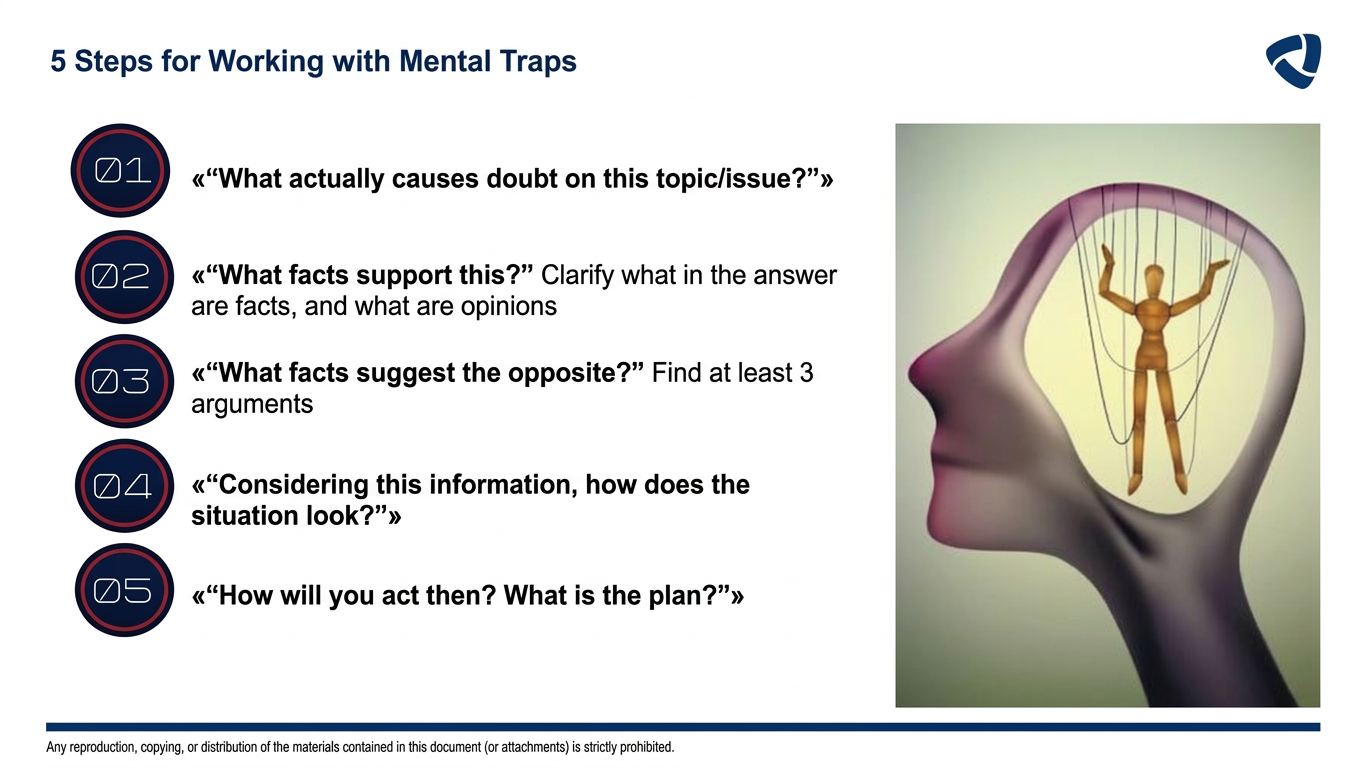
Mental Traps, or Why Do We Often Fail to See Risks?
There are several mental traps we will discuss today:
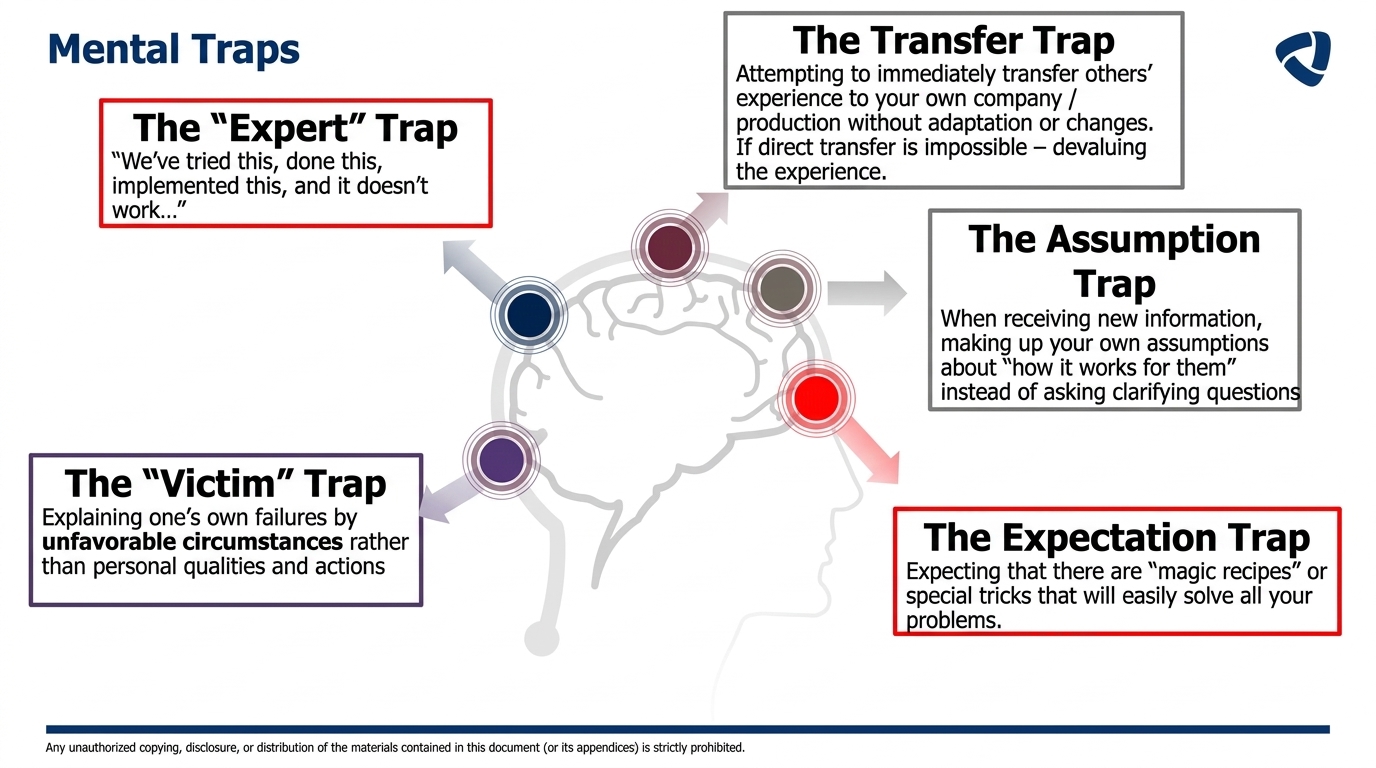
- Optimism is a trait inherent in absolutely every one of us; even the most desperate pessimist will still underestimate uncertainty — that's just how our brain is wired.
- Years of experience that form our habit of "turning a blind eye" to the risks we work with every day, meaning that most risks will be in a "blind spot." This mental trap leads us to a very important conclusion — risks should never be identified alone; it is a process that requires the involvement of a group of employees.
- The "one right solution" mindset — middle and senior managers often filter all new facts through the prism of what they know and believe, which prevents them from seeing new risks clearly. Managers believe they know everything and that involving anyone else or getting feedback is completely unnecessary.
- The belief that if a risk is obvious, someone somewhere is already managing it — the most common and dangerous misconception. Our task is to personally ensure that the risk is assessed and managed.
- Fear of change is a very dangerous mental trap. The misconception among managers and employees that if nothing has happened for many, many years, why should it happen now or tomorrow, and especially to me, an experienced specialist? It seems that for us, this is already at the level of a national mindset — avoiding responsibility for decisions at any cost.
- We place too much weight on measures that lead to the complete elimination of risk and ignore everything else — a dangerous misconception. Since most risks in a company cannot be eliminated entirely, they can only be competently mitigated.
Mental traps can and should be discussed, as we are exposed to them every day. If you are interested in the topic of mental traps, I recommend reading the works of two great scientists and pioneers of cognitive science, Amos Tversky and Daniel Kahneman — this will help us avoid falling into these traps.