Leaders on What Matters Most



Context: Why Safety Starts with the Top Executive
The transformation of industrial safety culture is impossible without the direct and active participation of the CEO. When HSE shifts from being a formal priority to a core company value, the entire risk management paradigm changes. In this panel discussion, top managers of large industrial enterprises openly discuss the real challenges businesses face when transitioning from a reactive to a proactive level of safety management.
From a Reactive to a Proactive Approach: Scaling Challenges
One of the key problems for growing companies is synchronizing safety attitudes among employees with different backgrounds. The presentation details the experience of the Irkutsk Oil Company. Marina Sedykh notes that with active staff growth and the involvement of contractors, a conflict of corporate cultures arises. Overcoming this barrier and transitioning to a proactive level requires changing the very mentality of the workers — developing the skill of continuous risk assessment in their work area.
As a systemic tool, the speaker highlights the implementation of a Process Safety Management (PSM) system. This is a complex but necessary process that requires attracting rare market experts and deep integration into production processes. Denis Paramoshin (Salym Petroleum Development) adds to this point, emphasizing that safety and efficiency are inseparable. The main task of a leader is to ensure that safe work becomes a conscious personal choice for every employee, rather than the result of constant supervision.
Tough Decisions: Production Shutdowns and Zero Tolerance
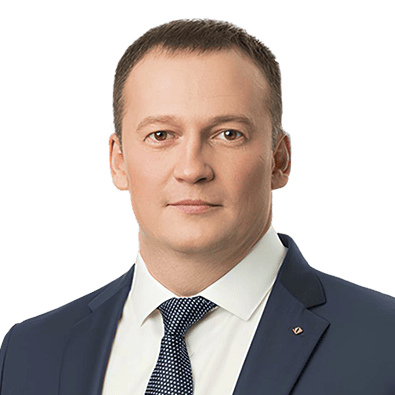
Safety culture is tested in moments of conflict between production targets and potential risks. Anatoly Skoromets (Gazpromneft-Lubricants) demonstrates by example how leadership manifests in critical situations. The speaker analyzes a case of shutting down a high-margin unit at the height of the season due to suspected equipment wear. The decision, made under the threat of severe sanctions in case of an error, prevented a large-scale accident — the inspection revealed through-corrosion of critical components.
The second crucial aspect touched upon in the discussion is the unacceptability of double standards. The speaker gives an example of firing a highly effective and respected production site manager for concealing an accident. Attempts to negotiate or hide an incident deprive the company of the opportunity to investigate root causes and prevent the tragedy from recurring in the future. Safety leadership does not bring popularity; it requires firmness in defending established rules.
Practical Principles for a CEO
Dmitry Trushkov (Voskresensk Mineral Fertilizers) formulates three mandatory rules for the top executive of a company striving for zero injuries:
- Personal example. The leader must strictly observe all established rules (e.g., using PPE). Any deviation legitimizes violations at all management levels.
- Intolerance to violations. Walking past a violation on site means giving tacit consent to unsafe work. The leader must stop the process and initiate a root cause analysis.
- Personal leadership in changes. When launching a new HSE initiative, the CEO must personally oversee it until the process becomes self-regulating.
Oleg Akilbaev (STES Cosmetics) adds that open communication is critical for implementing these principles. Employees should not be afraid to report problems, and the control tools should be sufficient but not excessive, so as not to turn into a bureaucratic barrier.
What you will learn from this webinar:
- How to argue to senior management the need for personal involvement in industrial safety issues?
- How a leader should act in a severe conflict between meeting the plan and accident risks, based on real examples?
- Why concealing incidents requires uncompromising personnel decisions, regardless of the employee's merits?
- What three practical steps a CEO must take daily to build a sustainable safety culture?
- How to integrate new employees and contractors into a unified proactive risk management system?