Critical Risk Management
The Illusion of Safety: Why Zero Injuries Won't Save You from Disasters
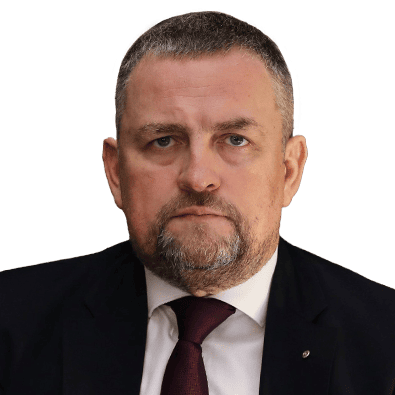
The HSE industry has long relied on minor injury rates (LTIFR) as the primary safety indicator. However, historical examples, such as the Deepwater Horizon platform accident, show that the absence of minor injuries does not guarantee protection against catastrophic events. In his presentation, man-made risk assessment expert Sergey Ryabov explains why the traditional approach needs revision and how the critical risk management methodology helps prevent mass casualties and asset loss.
Prioritization: Not All Violations Are Equally Dangerous
Any company's resources — time, budget, personnel — are always finite. It is impossible to control absolutely all risks simultaneously and with equal efficiency. The speaker emphasizes the need for strict prioritization: the focus should shift to significant negative events. These are situations that, if inadequately controlled, can lead to fatalities, massive environmental damage, or production shutdowns.
Instead of scattering attention on eliminating all minor flaws in a row, the critical risk management system proposes first building reliable protection against fatal threats using a system of barriers.
Technical and Organizational Barriers
Barriers are control elements that stand between the hazard source and a person or asset. The presentation details the division of barriers into two categories:
- Technical barriers: physical protection systems, such as rotating mechanism guards, earth leakage circuit breakers, or gas control systems. They operate independently of the human factor and prevent the development of an accident.
- Organizational barriers: permit-to-work systems, regulations for high-risk work, and multi-level control. They set the rules for the safe execution of tasks.
Bottom-Up Implementation: Checklists and Digital Control
One of the main problems with traditional briefings is that workers often do not absorb the information. To translate theory into practice, the speaker demonstrates the implementation of a personal checklist system using a mining enterprise as an example.
Before starting a shift, a worker fills out a short checklist, noting the critical safety parameters of their workplace. This takes only a couple of minutes but forces the person to consciously focus on key risks. Line managers (foremen) check these checklists using specialized smartphones. This approach ensures control transparency and allows management to see the state of barriers in each area in real time.
The Role of Top Management
The system will not work without the active participation of top management. Leaders must not only approve the list of critical risks but also appoint curators for each of them. Curators are responsible for defining objective parameters for evaluating barriers and monitoring their effectiveness, turning safety management into a measurable business process.
What you will learn from this webinar:
- How to identify critical risks from the enterprise's general hazard register?
- Why does traditional three-level control often fail, and how can it be modernized?
- How to implement a checklist system so that it does not turn into a formal brush-off for workers?
- What parameters should be used to objectively assess the effectiveness of organizational barriers?
- How to distribute responsibility for critical risk management among top management?
Comments 2
Dear organizing colleagues, good afternoon!
After yesterday's webinar with Sergey Ryabov, I had additional questions. Could you forward them to expert Sergey Ryabov?
The questions are: 1) What happens when a worker marks one of the "No" options in the checklist? How does the management system respond to such an answer?
2) What happens when a foreman discovers that a worker has filled out a checklist poorly (irresponsibly)? 3) Are there any metrics/KPIs in the company that characterize personnel work with checklists (both workers and foremen)?
Thank you in advance for the answer!
With respect, Kuptsov Dmitry
e-mail: ddkuptcov@severstal.com
Dmitry Kuptsov,
Thank you for the questions! We've forwarded them to Sergey, he will get back to you with feedback