#Contractors
Managing safety when working with contractors. Complex interaction systems: from pre-qualification (PQ) to final audit. Cases on introducing safety passports and digital access systems for contractors at industrial sites.

The Role of the HSE Function in Implementing the ESG Agenda
Integration of the HSE function into the corporate ESG agenda using a risk-oriented approach. Centralized risk management at the top management level, implementation of a contractor pre-qualification system, and automation of routine HSE processes through multifunctional centers.

Building a Safety Culture and Sustainable Development at Russian Railways (JSC RZD)
Integration of sustainable development (ESG) principles into the strategy of a major transport company. Implementation of environmental initiatives, including climate projects, green supply chains, and the circular economy, as well as employee engagement in HSE issues using the example of developing women's workwear.

Transition to Work as a Skill of Work Supervisors in a Safe Production Culture
Transformation of safety culture through debureaucratization of the regulatory framework, involvement of top management in interactive work formats, and development of the institution of safety culture representatives. Implementation of modern training tools, including VR simulators and mobile apps, as well as the integration of contractors and employees' families into a unified safety ecosystem.

Safety Culture. Who is Responsible?
Comprehensive transformation of safety culture in the nuclear industry through debureaucratization of the regulatory framework, changing the format of top management involvement, and creating an institute of safety culture representatives. The practice includes introducing interactive training formats, integrating safety requirements for contractors at the specification stage, and involving employees' families in shaping a value environment.
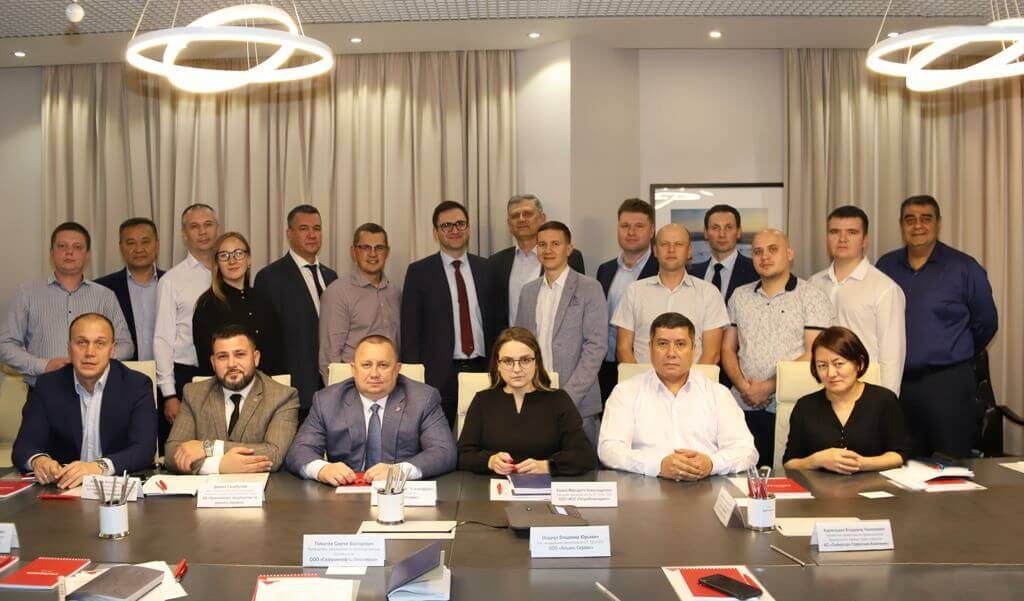
HSE Interaction with Contractors
The article is devoted to the work of the Partner Coordination Council, established by PJSC Gazprom Neft to develop cooperation with contracting organizations in the field of industrial safety. The platform brings together company specialists and contractors for joint problem solving at facilities, sharing best practices, and implementing joint projects. The material shows why this approach to interaction is the most effective for increasing safety levels at production facilities.

Contractor Management at INK LLC
A comprehensive contractor management system including digital prequalification, risk-based contract classification, onboarding training, and field audits. Financial motivation for proactive safety work is implemented with a prize fund of up to one million rubles.
"External Knowledge Assessment" Project. Development of Knowledge Matrices for Drilling and Well Intervention Crews
Implementation of a remote HSE knowledge testing system for contractor personnel using AI proctoring. Development of specialized knowledge matrices involving contractor experts and integration of testing results into an automated facility admission system.

Competency Barrier
A multi-stage admission system for contractors at an industrial facility, including risk appetite assessment, remote knowledge testing with proctoring, and practical skills verification. For on-site control, an admission passport with a tear-off coupon system for safety violations is used.

How to Choose a Contractor?
The selection of a contractor organization includes two key stages: pre-qualification to screen out weak candidates and technical evaluation to determine the tender winner. The article examines the application of an individual technical matrix with criteria for occupational health and safety, work experience, and quality management, as well as the procedure for managing risks when selecting an applicant. The material helps the Customer properly organize the contractor evaluation process and prep...

HSE System Maturity Analysis. Next Steps for System Development
Comprehensive launch of an industrial safety system from scratch at an enterprise with a long history. Includes maturity assessment, organizational structure revision, budget defense, audit implementation, incident investigation, PPE accounting automation, and personnel involvement in risk assessment.

Development of HSE Technical Training Elements in the Fertilizer Division of EuroChem MCC JSC
Creation of training grounds to practice hard skills in occupational and industrial safety. The system includes modular training with increasing scenario complexity, integration of safety procedures (e.g., LOTO) into basic technical processes, and objective knowledge assessment via checklists, including for contractor admission.

Development of a Training System for Drilling and Well Intervention Specialists
A multi-level training system for supervisors on regulatory and methodological documents (RMD), combining face-to-face and online formats. The practice includes cascading knowledge, dividing responsibility for RMDs between departments, and automating testing to increase awareness of safety rules compliance.