Are You Confident in the Quality of Your Facility's Permit-to-Work System?
Briefly from the previous article
In my previous company, my team and I had experience implementing a risk management tool for work under the Permit-to-Work (PTW) system.
The tool consists of 2 parts:
- Assessment of fatal risks for the specific job.
- Assessment of compliance with the Permit-to-Work system.
I will discuss the second part of the tool in this article.
The essence of the methodology in brief:
- There are three main, clearly defined roles in the Permit-to-Work system:
- Permit Issuer
- Permit Acceptor
- Work Supervisor
From a safety perspective, their responsibilities are as follows:
Issuer: responsible for the completeness of safety measures in the permit based on the specific risks of the work;
Acceptor: responsible for the quality of the work authorization for the supervisor, ensuring that on-site conditions match what is specified in the permit;
Work Supervisor: responsible for authorizing the crew to start work and ensuring the crew follows safety measures during the job in accordance with the permit (including compliance with work execution plans, method statements, and technical maps).
- Furthermore, the Permit-to-Work system sets requirements for the work site, specifically:
- The Acceptor (client department): must hand over the work site to the contractor in a clean, uncluttered state;
- The Work Supervisor: upon completion of the work, must return the site to the client department in the same clean, uncluttered state.
- The effectiveness of the Permit-to-Work system is evaluated based on these points (1 and 2).
- Role performance measurements (per point 1) are conducted by HSE Directorate specialists during routine inspections of high-risk work.
- Measurements of the "dynamic safe workspace" (per point 2) are carried out by the Acceptors and Work Supervisors themselves, with ratings entered into a dedicated mobile application.
- Both types of measurements are consolidated within a unified HSE IT system and serve as the basis for contractor ratings and the performance rating of the Permit-to-Work system within the department.
Schematically, it works like this:
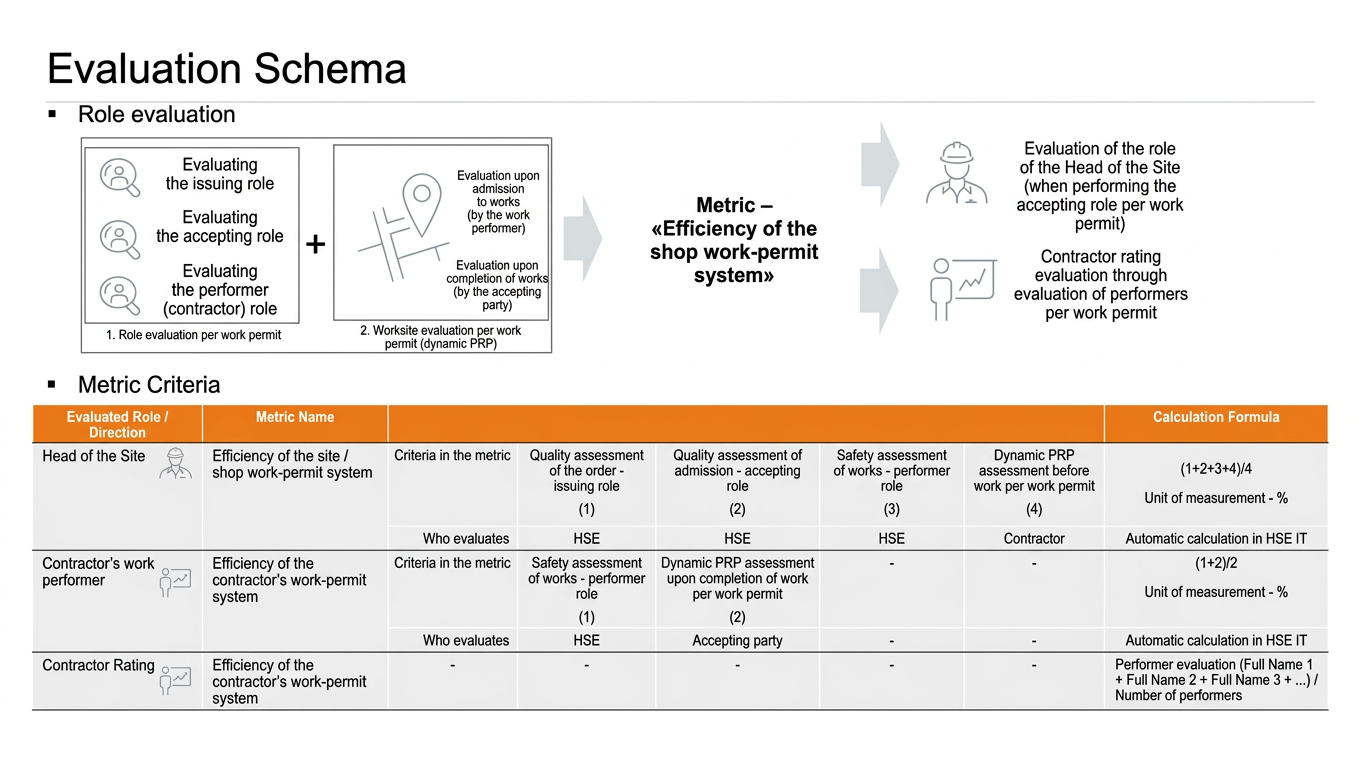
Effectiveness Evaluation
The described approach allows for the creation of a transparent contractor rating system based on actual safety during work performed under permits.
Additionally, establishing a departmental rating for Permit-to-Work system effectiveness helps reduce injuries during maintenance and repair work.
Disadvantages
- Additional costs for the mobile application.
- Granting contractors access to the Company's mobile application.
Like any tool, its effectiveness requires belief in the system and support from both production personnel and the HSE Directorate.